OWNED
AUDIENCE
PLAYBOOK
How many social channels are you "supposed" to be on right now?
If you've read a few marketing guides, the answer is probably all of them. Every platform gets a section, every section says roughly the same thing (optimise your bio, post consistently, add a link), and by the end you feel like you need to be everywhere at once.
That's the quickest way to be good nowhere.
So this chapter does something different. We'll cover the big channels beyond LinkedIn, but we'll be honest about who each one suits. The goal is to help you pick one or two that fit, not to have you juggling six.
Because juggling six is how burnout happens. And burnout has never grown anyone's email list.
Instagram: for visual, lifestyle and personality-led newsletters
Instagram's strength is visual storytelling. If your newsletter lives in a niche where imagery, aesthetics or personality carry the content (food, wellness, travel, design, fashion, creative work), it can be a solid growth channel.
If your newsletter is mostly text and ideas, Instagram is harder work for less return. Worth trying, as long as you're realistic about it.
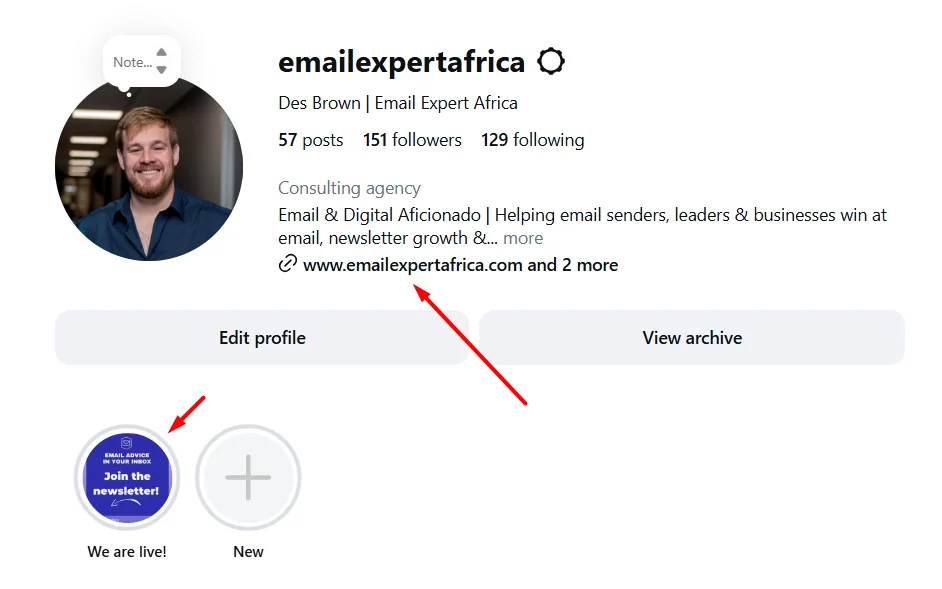
Use your bio links properly. Instagram lets you add up to five links to your bio, so you may not need a link-in-bio tool at all. Put your sign-up page first. It's the one people see.
Lean on Stories. A peek at what's in this week's issue, a question sticker related to your topic, or a "new issue's out" card with a link sticker. Stories feel personal, so the clicks they bring tend to be warm ones.
Use Reels to reach new people. Feed posts keep your existing followers happy. Reels are how strangers find you. If growth is the goal, Reels need to be in the mix (even if filming them makes you cringe a little).
The honest limitation: Instagram wants people to stay on Instagram. Every sign-up asks the viewer to take a deliberate extra step off the platform, so set your expectations accordingly.
TikTok: for reaching new people fast (with caveats)
TikTok's reach is unlike anything else out there. A video from an account with no followers can still reach a huge audience if it lands, because the For You feed is built to show people content from accounts they don't follow.
For newsletter growth, it works best when your content suits short video: quick tips, contrarian takes delivered to camera, behind-the-scenes process. If you can teach something useful in a minute or so, and do it naturally, TikTok has real potential.
Think about who's watching. TikTok skews younger than LinkedIn. If your newsletter is for senior professionals in traditional industries, it may bring volume without much quality. If your audience is creators, entrepreneurs or younger professionals, the fit is much better.
Mind the conversion path. Your bio link is the main way off the platform (and depending on your account type, TikTok may only let you add it once you reach 1,000 followers). Deliver value on the platform first, build trust there, and send people to your bio link now and then. Pushing people off TikTok in every video tends to backfire.
One honest flag: TikTok's US future was uncertain for years, until a new US joint venture was finalised in January 2026. That's settled things for now, but it's a good reminder that every social platform is rented land. Keep a second channel going, and keep turning viewers into subscribers.
YouTube: slow to start, quick to pay you back
YouTube is slow. There's no way around that. Building a channel from scratch takes time, consistency and a decent tolerance for early videos that nobody watches.
But it pays you back in a way most platforms don't. A video that ranks in YouTube search can keep bringing in views (and subscribers) for years. Your work doesn't vanish into a feed after a day.
It's especially good when your topic benefits from depth: tutorials, walkthroughs, case studies, interviews. If video adds something text can't, it's worth the effort.
To connect it to your list:
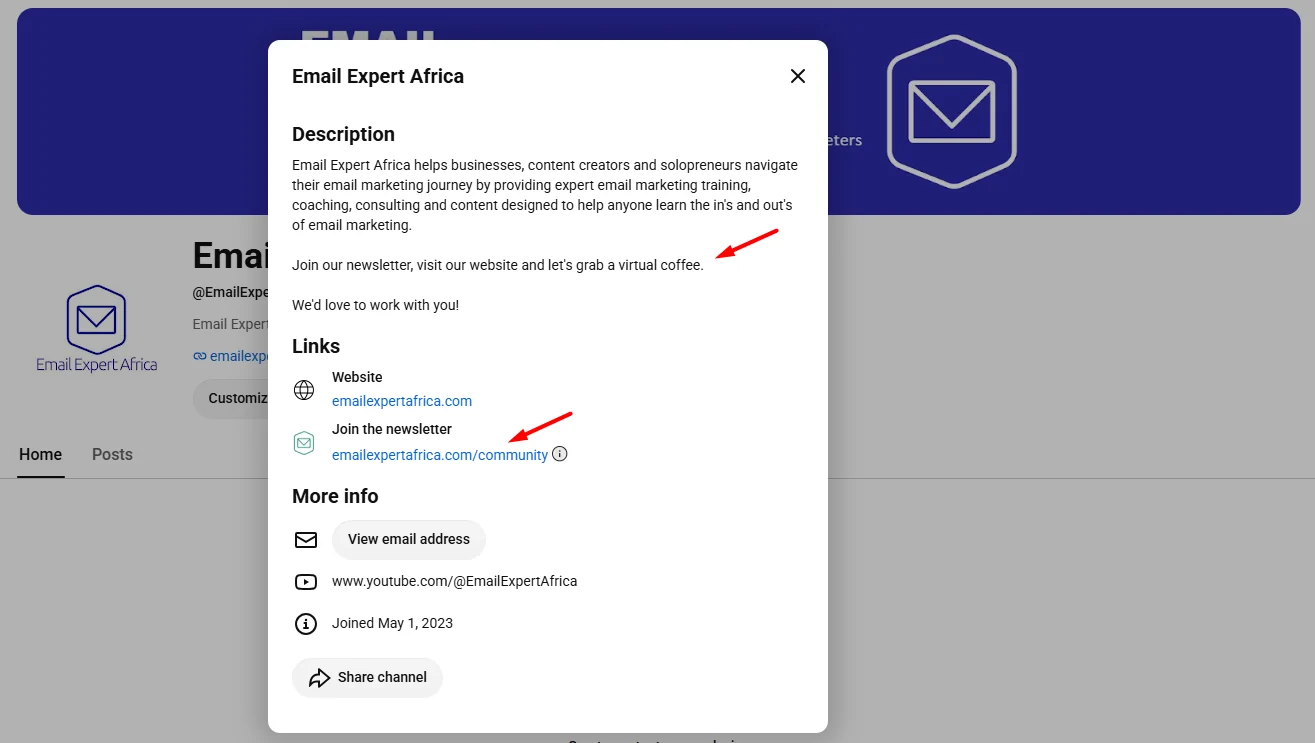
- Put your sign-up link in every video description, every time.
- Mention the newsletter out loud in videos where it fits naturally.
- Use end screens and a pinned comment to point people to your sign-up page.
Someone who subscribes to your channel has already opted into a relationship with you, which makes them a warmer prospect for your list than a stranger from search.
X: still worth it for the right audience
X has had a turbulent few years, and its audience looks quite different from the old Twitter days.
For some niches, though, it still works well for newsletter growth. Tech, finance, startups, media and anything close to internet culture still have an engaged, curious crowd on X that converts nicely to email.
The platform rewards brevity and opinion. Sharp takes that start conversations, threads that go deep on one topic, and replies that add something to conversations your audience is already having.
Threads (the X kind) are your best format. A well-built thread that breaks a complex topic into digestible pieces gets bookmarked, shared and found again later.
Pin a post that sells your newsletter. Someone lands on your profile, reads your pinned post and knows straight away what your newsletter is and why they should care.
About links: for years, the advice was to keep links out of your posts because X seemed to bury them. In July 2026, Elon Musk said X hadn't penalised links "for over a year", and some newer data backs that up, while plenty of older analyses showed a big drop. Our take? Test it on your own account and trust your own numbers.
Emerging channels worth watching
A few more that are worth knowing about:
Threads (Meta's). Hit 500 million monthly users in June 2026, and it's closely tied to Instagram. If you're already on Instagram, it's not much extra effort to post there too, and it puts you in front of a similar crowd in a more conversational setting.
Substack Notes. The short-form social feed inside Substack. If your audience includes newsletter writers and readers, people there are already newsletter people, which makes them some of the warmest prospects you'll find.
Reddit. Use it badly and you'll be banned from a community in about four minutes. Use it well and it can be brilliant. Take part properly in communities relevant to your niche first, and only mention your newsletter when it actually answers someone's question. People there sought out a community around your topic, which is a strong signal.
Discord and other community spaces. A different way of building an audience altogether. A community around your newsletter topic gives people a place to talk, and members who feel part of something tend to share, refer and stick around.
So, which ones should you pick?
Choose one or two channels where your audience already spends time, where your content format feels natural, and where you can realistically show up for the next six months.
That last one matters most, and it's the one people skip.
A decent presence kept up for six months beats a brilliant burst followed by silence, every time. Audiences reward reliability, and your own motivation holds up much better when you're not feeding six channels at once.
Start with the channel that feels most natural. Add a second only once the first is working.
So, which channel would you still happily post on six months from now, even on a bad week?
Want this chapter for later? Grab it as a PDF, free.